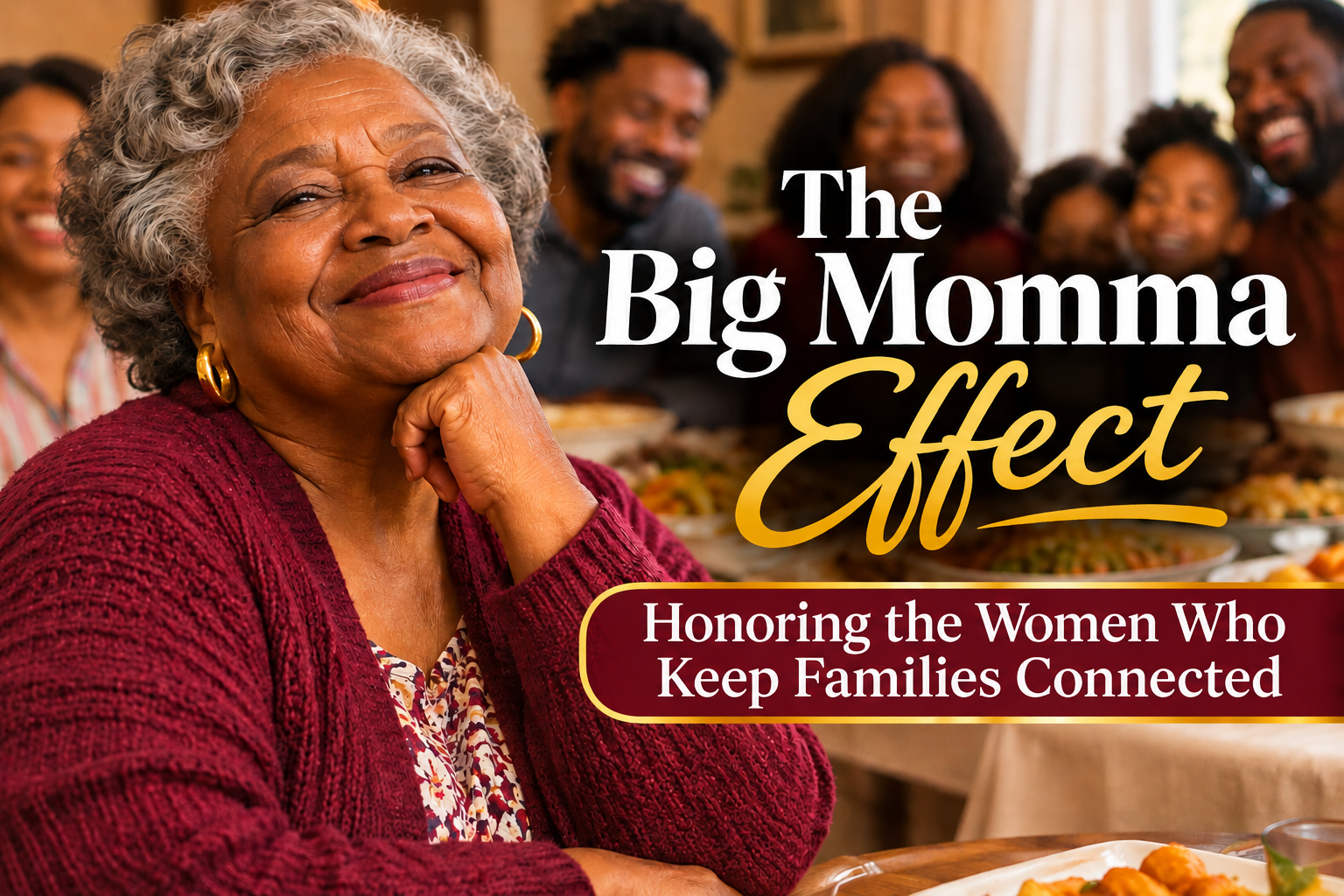
There is often one person in a family who makes sure everybody stays connected. She is the one who remembers birthdays, checks on relatives, keeps family traditions alive and somehow knows when somebody has not been around in a while.
She is Big Momma.
In many Black families, the family matriarch is more than a mother or grandmother. She is a storyteller, a source of wisdom, a keeper of traditions and, often, the person who brings everyone back together.
For many moviegoers, the 1997 film Soul Food captured that familiar presence through Irma P. Hall’s unforgettable portrayal of Big Mama. Her character represented something that audiences recognized beyond the screen: the importance of having someone who makes family feel like home.
The real-life Big Mommas may not have a movie soundtrack or a Sunday dinner scene filmed for the world to see. But their influence is often felt in the smallest moments. It is in the recipes passed down without written instructions, the family stories repeated at gatherings, the lessons shared around the kitchen table and the phone calls that begin with, “I was just checking on you.”
They are often the ones reminding younger generations where they came from while encouraging them to keep moving forward.
But honoring the family matriarch also means recognizing that these women are human. They carry responsibilities, experience loss, face challenges and sometimes spend so much time caring for everyone else that their own needs go unnoticed. Their love should never be mistaken for an unlimited supply of strength.
As the holiday season approaches, the role of the family matriarch can become even more visible. Thanksgiving dinners, Christmas gatherings and family traditions often bring back memories of the people who once made those moments special. For some families, the holidays may also be the first without a beloved mother, grandmother or elder at the head of the table.
That is why this season is an opportunity to be intentional. Make the call. Visit when you can. Ask about the stories you have not heard. Write down the recipes. Take the pictures. Tell the women who have poured into your family what they mean while they are still here to hear it.
And remember that keeping a family connected should never rest on one person’s shoulders alone. The next generation has a responsibility to carry those traditions forward.
The Big Momma effect is not simply about who sits at the head of the table. It is about the love, history, guidance and sense of belonging that make people want to gather around it.
Because long after the plates are cleared and the holidays have passed, the lessons of the family matriarch are what remain. To all the “Big Mommas” to have enriched our lives and made our family’s better. We love you and appreciate you!
About the Author