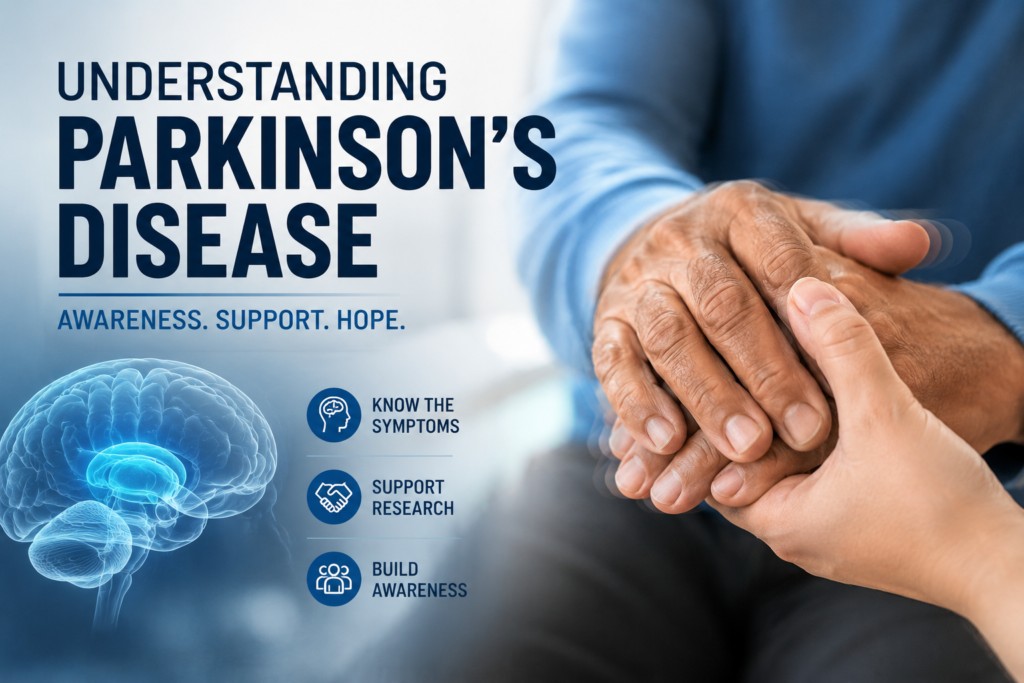
Parkinson’s disease is a progressive neurological disorder that affects movement, balance, and coordination. It occurs when nerve cells in the brain that produce dopamine—a chemical responsible for controlling movement—begin to deteriorate or die.
According to health experts, Parkinson’s disease affects millions of people worldwide and is most commonly diagnosed in adults over the age of 60. While the exact cause remains unknown, researchers believe a combination of genetic and environmental factors may contribute to the development of the condition.
Common symptoms include tremors, stiffness, slowed movement, balance problems, and changes in speech or handwriting. As the disease progresses, some individuals may also experience sleep disturbances, depression, memory challenges, and other non-motor symptoms.
Although there is currently no cure for Parkinson’s disease, advances in medical treatment have helped many patients manage symptoms and maintain their quality of life. Treatment options may include medication, physical therapy, lifestyle changes, and, in some cases, surgical procedures designed to improve motor function.
Researchers around the world continue to study Parkinson’s disease in hopes of developing more effective treatments and ultimately finding a cure. Increased awareness campaigns and fundraising efforts have also helped bring attention to the challenges faced by patients, caregivers, and families living with the condition.
As the global population ages, health experts anticipate that Parkinson’s disease will continue to impact more individuals, making education, early diagnosis, and ongoing research more important than ever.
About the Author